

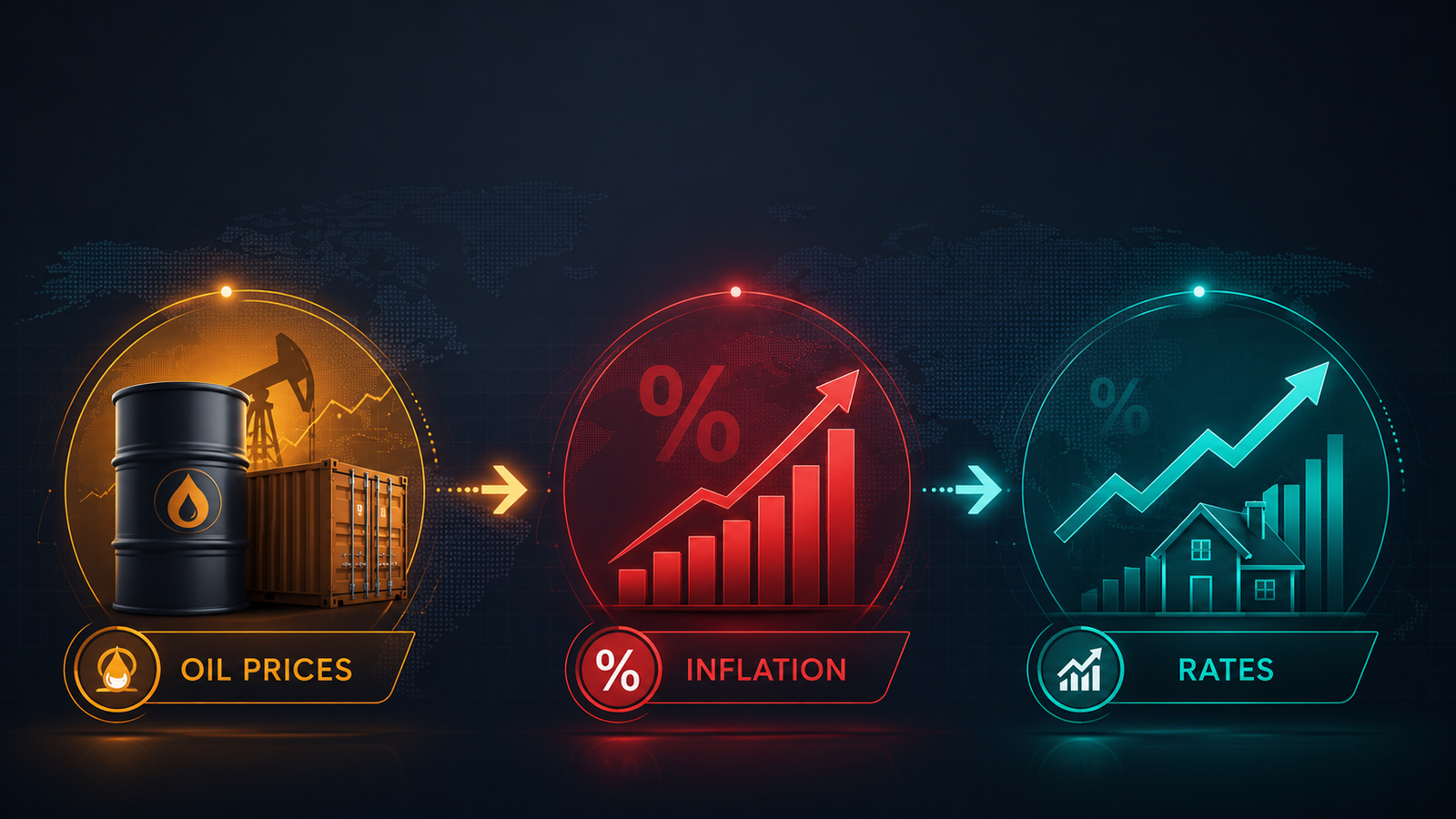
Raleigh Mortgage Market Update: Oil Prices, Inflation, and Rates 07/31/2026
Raleigh Mortgage Market Update: Oil Prices, Inflation, and Rates If there’s one thing to know about this week’s rate movement, it’s that we ended almost
Mortgage Rates Hit a 1-Year High 07/24/2026
Weekly Mortgage Market Update: Mortgage Rates Hit a 1-Year High This Week: What It Means for Raleigh & North Carolina Homebuyers Quick Answer: According to

Mortgage Rates Improve After Cooler Inflation Reports 07/17/2026
Weekly Mortgage Market Update: Mortgage Rates Improve After Cooler Inflation Reports Mortgage interest rates ended the week slightly lower after one of the most volatile

Oil Prices and Mortgage Rates: What’s Driving the Market Right Now? 07/10/2026
Weekly Mortgage Market Update: Oil Prices and Mortgage Rates: What’s Driving the Market Right Now? The Bottom Line Up Front Oil prices and mortgage rates
Why Do Raleigh Mortgage Rates Remain Elevated This Week?
Raleigh mortgage rates remain elevated this week, though still below recent highs, due to underlying market factors. Mortgage rates ended the week slightly higher, with the story behind the move...

Why Did Mortgage Rates Drop? 06/26/2026
Weekly Mortgage Market Update: Why Did Mortgage Rates Drop? Over the past few months, the Raleigh housing market has seen its fair share of dramatic
How Do Peace Deals, the Fed, and Global Events Impact Your Raleigh Mortgage?
Peace deals, the Fed, and global events like the Iran war significantly impact your Raleigh mortgage. Since March 1st, the Iran war has been the primary reason for movement and volatility in the mortgage market...

How Does Cooling Inflation Still Lead to Higher Raleigh Mortgage Rates?
Even with inflation cooling at the surface, an underlying undertow is still pulling Raleigh mortgage rates higher. This week handed the mortgage market a mixed bag of economic signals...

Mortgage Rates Finally Look Past War Headlines. Unfortunately, They Looked Up 06/05/2026
Weekly Mortgage Market Update: Rates Finally Look Past War Headlines. Unfortunately, They Looked Up Mortgage rates spiked to two-week highs on Friday after a surprisingly
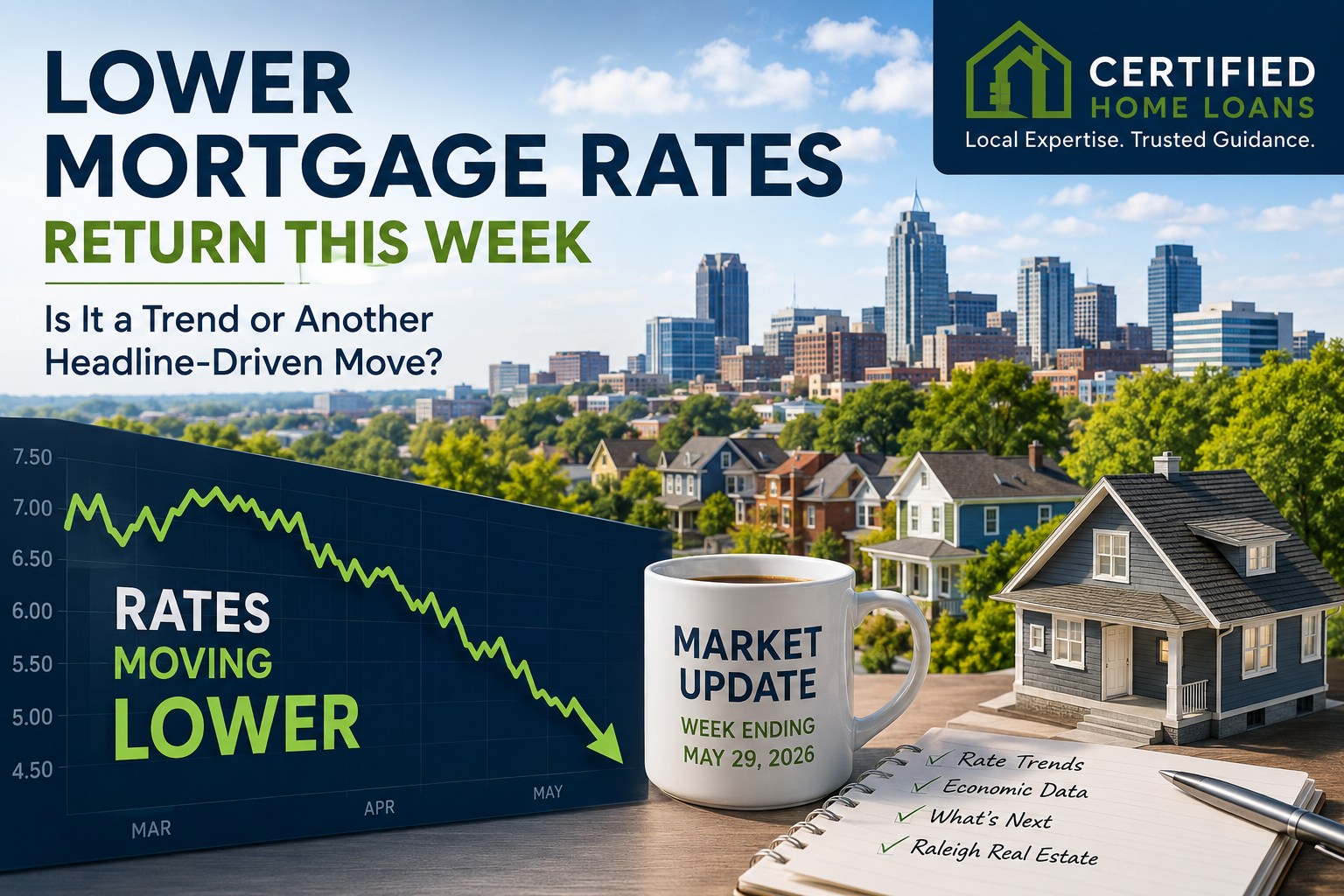
Lower Mortgage Rates Return 05/29/2026
Weekly Mortgage Market Update: Lower Mortgage Rates Return. Is It a Trend or Another Headline-Driven Move? Mortgage rates moved lower this week, offering welcome relief
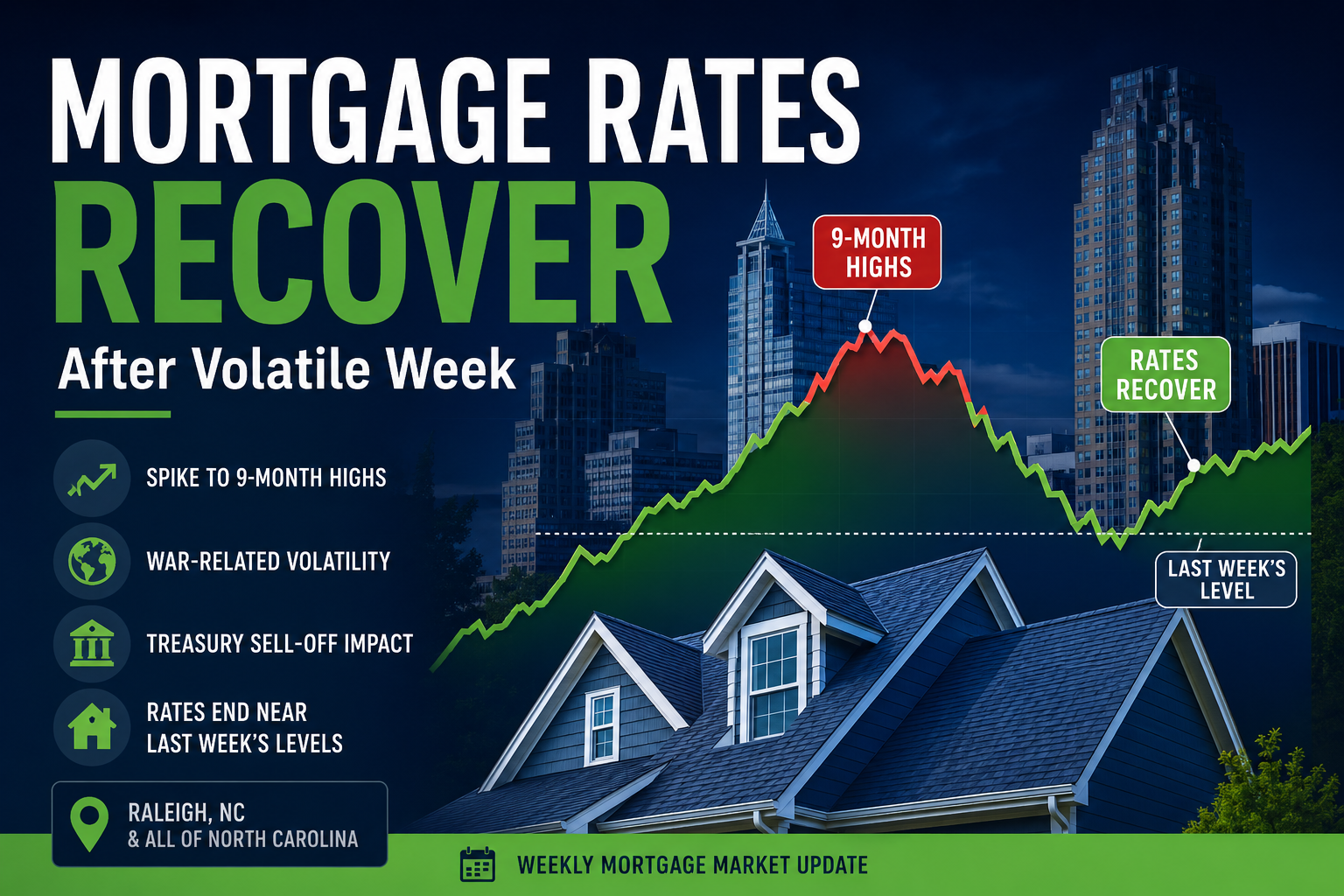
Mortgage Rates Recover After Hitting 9-Month Highs 05/22/2026
Weekly Mortgage Market Update: Mortgage Rates Recover After Hitting 9-Month Highs This week brought the sharpest mortgage rate volatility since late March, with rates climbing
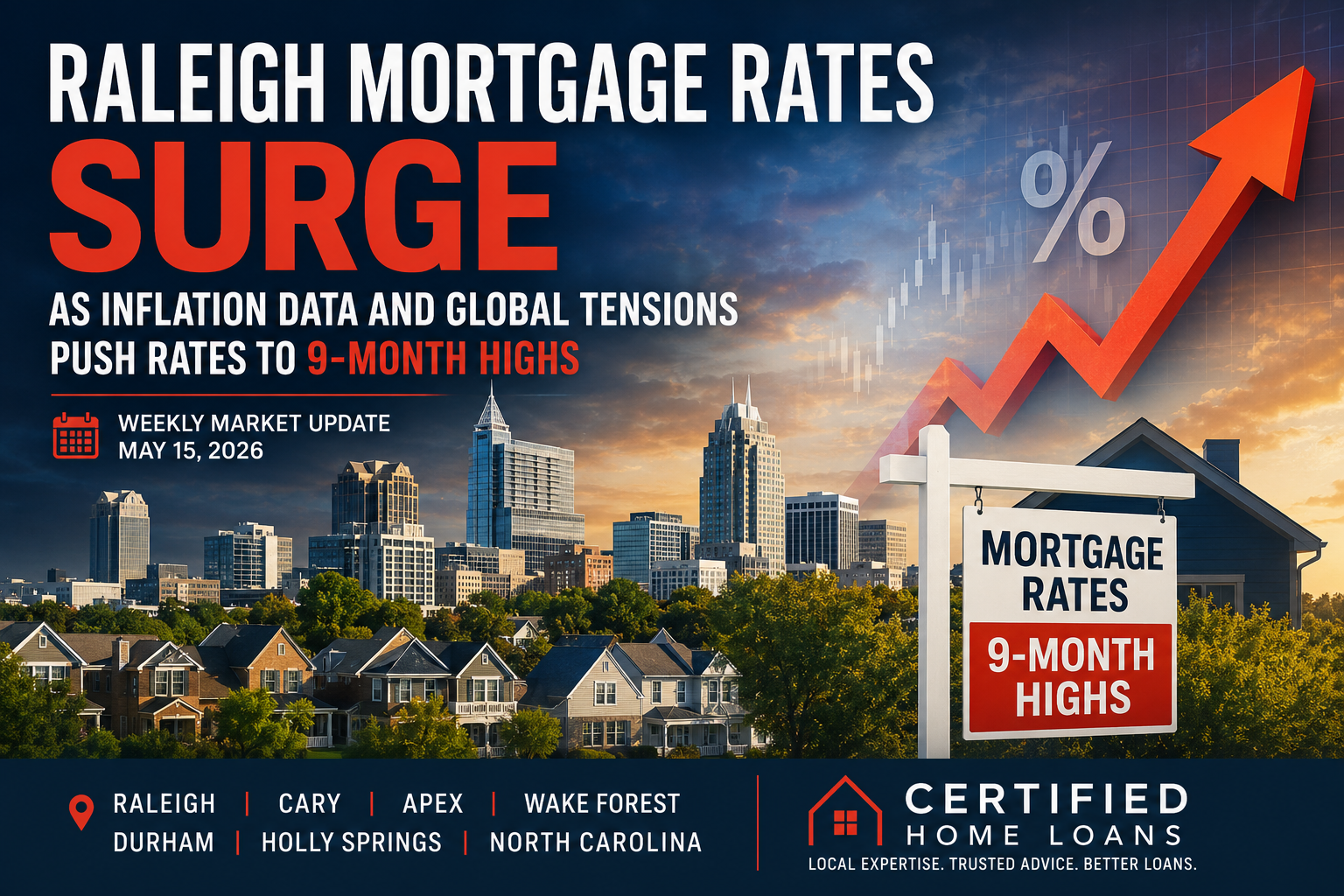
Raleigh Mortgage Rates Surge as Inflation Data and Global Tensions Push Rates to 9-Month Highs 05/15/2026
Weekly Mortgage Market Update: Raleigh Mortgage Rates Surge as Inflation Data and Global Tensions Push Rates to 9-Month Highs Mortgage rates moved sharply higher this
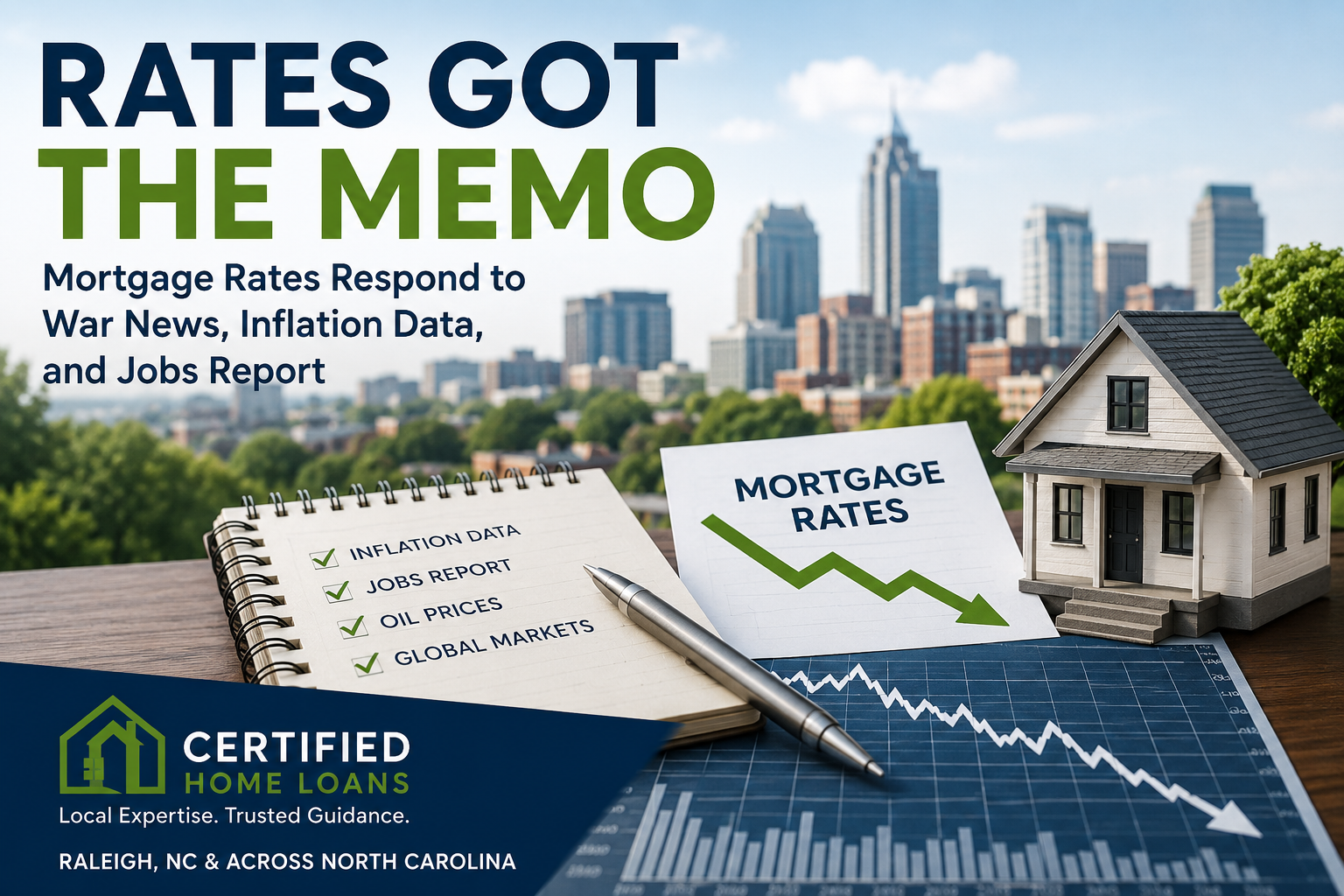
Raleigh Mortgage Rates React to Inflation, Jobs Data, and Global Markets 05/08/2026
Weekly Mortgage Market Update: Raleigh Mortgage Rates React to Inflation, Jobs Data, and Global Markets Wednesday delivered the biggest mortgage market movement of the week
Mortgage Rates Jumped This Week, But Found a Ceiling 05/01/2026
Weekly Mortgage Market Update: Mortgage Rates Jumped This Week, But Found a Ceiling Last week’s calm in the bond market gave way to a more

Mortgage Rates Hold Steady as Markets Await War Developments 04/24/2026
Weekly Mortgage Market Update: Mortgage Rates Hold Steady as Markets Await War Developments If mortgage rates followed a script, this week would be the slow
Mortgage Rates Didn’t Fall as Much as The Market Suggested 04/17/2026
Weekly Mortgage Market Update: Mortgage Rates Didn’t Fall as Much as The Market Suggested The good news: mortgage rates ended the week at the lowest

How Are War Developments Impacting Raleigh Mortgage Rates and Volatility?
War developments are impacting Raleigh mortgage rates, though volatility continues to ebb. Whereas the entire month of March saw interest rates go “up, up, and away,” this week shows a different trend...
Why Are Raleigh Mortgage Rates Lower This Week After a Calmer Market?
Raleigh mortgage rates are lower this week after a relatively calmer market. First things first, due to the market’s reaction to the Iran war, mortgage rates remain...
Raleigh Mortgage Rates Climb, Rising Inflation War Impact 03/27/2026
Weekly Mortgage Market Update: Raleigh Mortgage Rates Climb, Rising Inflation War Impact Mortgage markets remained heavily influenced by global events this week, with inflation expectations
Raleigh Home Loan Rates React to Inflation, Housing Data, and Fed Outlook 03/13/2026
Weekly Mortgage Market Update: Raleigh Home Loan Rates React to Inflation, Housing Data, and Fed Outlook Mortgage markets navigated another eventful week as investors digested

Raleigh Mortgage Rates React to Weak Jobs Report and Inflation Signals 03/06/2026
Weekly Mortgage Market Update: Raleigh Mortgage Rates React to Weak Jobs Report and Inflation Signals Mortgage markets experienced a volatile week as investors reacted to
PPI Inflation Heats Up as Mortgage Rates Hold Near Multi-Year Lows 02/27/2026
Weekly Mortgage Market Update: PPI Inflation Heats Up as Mortgage Rates Hold Near Multi-Year Lows Mortgage rates ended the week at levels near the lowest

Core PCE & Inflation Drive Mortgage Rates 02/20/2026
Weekly Mortgage Market Update: Core PCE & Inflation Drive Mortgage Rates Mortgage-backed securities faced renewed pressure this week as hotter inflation data and stronger regional
How Do Easing Inflation and Bond Market Rallies Affect Raleigh Mortgage Rates?
Easing inflation and bond market rallies are positively affecting Raleigh mortgage rates. Mortgage-backed securities rallied this week even as headline economic data suggested rates...
