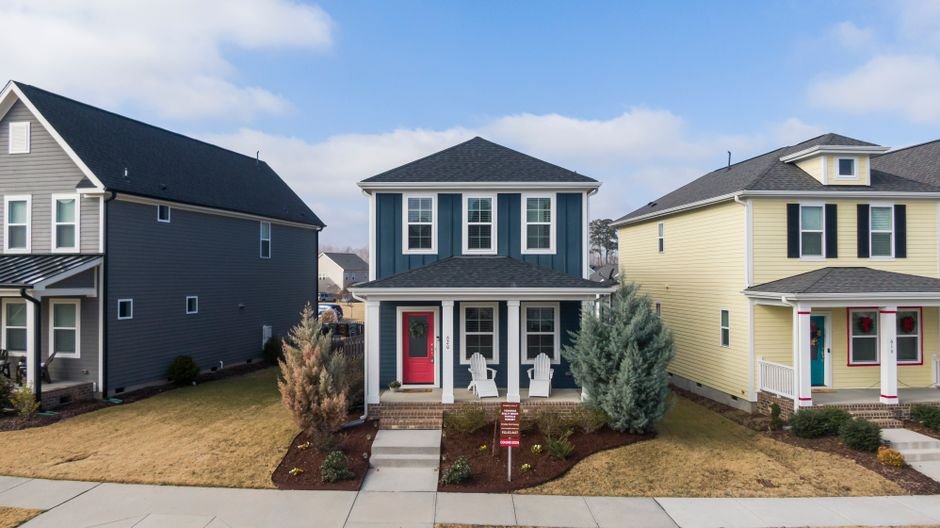
Confused about HELOC vs. cash-out refinance? We break down both options to help you tap your home equity the smart way in Raleigh.
So you’ve got equity sitting in your Raleigh home, and you’re wondering how to access it. The two biggest paths forward are a Home Equity Line of Credit (HELOC) and a cash-out refinance. Here’s the honest answer: it depends on your mortgage rate, how much flexibility you want, and whether you’d rather simplify your payments or keep things exactly as they are.
The Quick Breakdown: HELOC vs. Cash-Out Refinance
A cash-out refinance replaces your entire current mortgage with a new loan. You get one new rate, one new term, and your cash in a lump sum. Simple, clean, one monthly payment.
A HELOC works differently. It’s a second loan that sits on top of your existing mortgage. You keep your current mortgage untouched (same rate, same payment), and you tap your equity through a credit line. You only pay interest on what you actually borrow.
The biggest difference? Your existing mortgage rate. If you love your rate and want to keep it, a HELOC wins. If you’re open to renegotiating your entire mortgage package, a cash-out refinance might make more sense. Many homeowners in the Triangle work with Certified Home Loans to compare both scenarios side by side before deciding.
Related: Certified Home Loans vs. Traditional Banks: Which Is Right for Your Raleigh Mortgage?
Related: FHA vs. Conventional Mortgages in Raleigh NC: Which Is Right for You?
Related: FHA vs Conventional vs VA Loans: Which Program Is Right for Your Raleigh Home Purchase in 2026
Related: FHA vs. Conventional vs. VA Loans in Raleigh: Which Saves Most Money in 2026?
Cash-Out Refinance: Best If You Want Simplicity
A cash-out refinance closes out your old loan and gives you a brand new mortgage. You get cash, a fresh start, and one single monthly payment.
This option shines when you have a higher mortgage rate now than you did before. Maybe you got a 6% loan three years ago, and rates have dipped to 5.5%. You could refinance, lock in the lower rate, and pull out cash at the same time. You’re improving your rate AND getting liquidity.
A cash-out refinance also simplifies your life. Instead of juggling a first mortgage and a second loan (HELOC), you manage one obligation. One due date. One lender relationship.
The downside? You’re replacing your entire mortgage. Closing costs apply. You reset your loan term, so if you were 8 years into a 30-year mortgage, a new 30-year loan adds 8 years of payments back on. That matters.
You’ll also need to qualify based on your full debt load and income all over again. The lender pulls your credit, orders an appraisal, and does the full underwriting dance.
HELOC: Best If You Want to Keep Your Current Rate
A HELOC lets you borrow against your home equity without touching your first mortgage. You keep your current rate, your current payment, and your current loan exactly the way it is.
This is huge if you locked in a 3.5% mortgage five years ago and rates are now 6%. You’re not going to refinance and jump into a higher rate. A HELOC gives you cash access without forcing that painful decision.
HELOCs also offer flexibility. You don’t have to borrow the full amount at closing. Many HELOCs work like a credit card: you have a credit line available, and you draw what you need, when you need it. You only pay interest on what you actually use.
The catch? You’re carrying two loans now. Two monthly payments (or potentially three if you draw on the HELOC and make interest-only payments during the draw period). Two lenders to deal with. Slightly more complexity, but way less disruption to your first mortgage.
HELOCs can also have variable interest rates, which means your payment could go up if the market shifts. That’s different from a cash-out refinance, where you typically lock a fixed rate.
Key Decision Factors: How to Choose

Your mortgage rate is job number one. If you’re happy with your current rate, lean toward a HELOC. If your rate feels high and you’d jump at a better one, cash-out refinance makes sense.
How much cash do you need? If you’re pulling out $50,000 for a kitchen remodel or paying off debt, both work. If you might need different amounts over the next few years (say, you’re planning a remodel now and another project in two years), a HELOC’s draw-as-you-go setup is nicer.
Can you handle a higher monthly payment? A HELOC might add a second payment. A cash-out refinance typically replaces your first payment entirely. Think about your budget and what feels manageable.
How long are you staying in your home? Refinancing costs money upfront (appraisal, title, origination, closing costs). If you’re selling in three years, those costs might not pencil out. A HELOC has fees too, but they’re usually smaller.
Real Numbers: What You’re Actually Paying
Let’s say you have a $300,000 mortgage at 5.5% and you want to pull out $40,000.
Cash-Out Refinance: You’d get a new $340,000 loan. If rates are 5.2%, you lock that in. You might pay $3,000-$5,000 in closing costs. Your monthly payment would adjust based on the new balance and rate.
HELOC: You’d keep your $300,000 loan at 5.5% and open a $40,000 HELOC at maybe 7.5% (HELOCs are typically higher-rate products). You’d have two payments, but you control how fast you pay down that second line. HELOC setup fees are usually $500-$1,000.
The math isn’t always obvious until you run both scenarios with your actual numbers. That’s exactly why working with Certified Home Loans helps. They can show you the actual payments, rates, and costs for your specific situation in the Raleigh market.
The Raleigh Housing Market Angle
Raleigh’s real estate market has been hot. Home values have climbed, which means most homeowners now have solid equity to work with. That’s good news for both HELOC and cash-out refinance options.
If you bought 3-5 years ago in the Triangle, your home’s likely worth more now, giving you more borrowing power. Lenders like to see you borrow no more than 80-85% of your home’s total value (combining all loans). In a rising market like Raleigh, that’s easier to qualify for.
That said, interest rates and your personal rate are still the deciding factors. The strength of the local market just means you probably have options.
When to Refinance Everything (Cash-Out Refinance)

- Your current mortgage rate is noticeably higher than market rates today.
- You want one simple monthly payment instead of juggling two loans.
- You’re planning a major expense (home addition, debt payoff) and need a chunk of cash upfront.
- You’re comfortable with closing costs and the time it takes to close a new loan.
- You’re staying in your home for at least 3-5 more years (to recoup closing costs).
When to Get a HELOC Instead
- Your current mortgage rate is fantastic, and you want to keep it.
- You want flexibility to borrow as you go, rather than taking all the cash at once.
- You’re hoping to minimize upfront costs and closing disruption.
- You prefer the simplicity of keeping your first mortgage exactly the way it is.
- You might need access to cash over the next few years (not just right now).
How to Get Started in Raleigh
Both products require a home appraisal, proof of income, and a credit check. Both will review your debt-to-income ratio. Both typically take 30-45 days from application to closing.
The smartest move? Talk to a lender who can run both scenarios for you. Show them your current mortgage docs, your home value estimate, and your financial picture. Ask for a side-by-side breakdown of payments, rates, and closing costs.
Certified Home Loans specializes in exactly this kind of comparison. They work with homeowners across the Triangle to find the solution that actually fits your goals, not just the flashiest option.
Bottom Line
There’s no universal winner between a HELOC and a cash-out refinance. Your choice hinges on three things: your current mortgage rate (happy with it? HELOC. Want to improve it? Refinance), how much flexibility you need, and whether you’re willing to pay refinancing costs.
Get quotes from both. Run the numbers. Check the actual rates you’d qualify for. Then decide based on your own comfort level, timeline, and financial goals. The right answer for your neighbor might be wrong for you, and that’s okay.
FAQ: Home Equity Line of Credit vs. Cash-Out Refinance
Can I use a HELOC and a cash-out refinance at the same time?
Technically yes, but it’s rare and usually not smart. You’d be piling on debt. Most lenders want to see your total debt-to-income ratio stay reasonable. Talk to your lender about whether it makes sense in your situation.
What if I only need a small amount of cash?
A HELOC might be your friend. You’d open the line, borrow only what you need, and avoid refinancing your entire mortgage. Closing costs are smaller, and the process is faster. A cash-out refinance makes more sense if you’re pulling out $30,000 or more.
Can I lock in a fixed rate with a HELOC?
Some lenders offer fixed-rate HELOCs, but most are variable. Ask your lender. Certified Home Loans can walk you through the fixed vs. variable question and help you understand what each option means for your budget.
How long does each option take to close?
Both typically close in 20-35 days. A HELOC might move slightly faster because there’s no full mortgage underwriting. A cash-out refinance involves more documentation, but the timeline is comparable. Ask your lender for a specific estimate based on your application.
What about tax deductions? Can I deduct HELOC interest?
According to IRS Publication 936, you can deduct mortgage and HELOC interest if the loan proceeds are used to buy, build, or improve your home. If you use HELOC cash for other purposes (paying off credit cards, a car), interest isn’t deductible. Always talk to a tax professional about your specific situation.